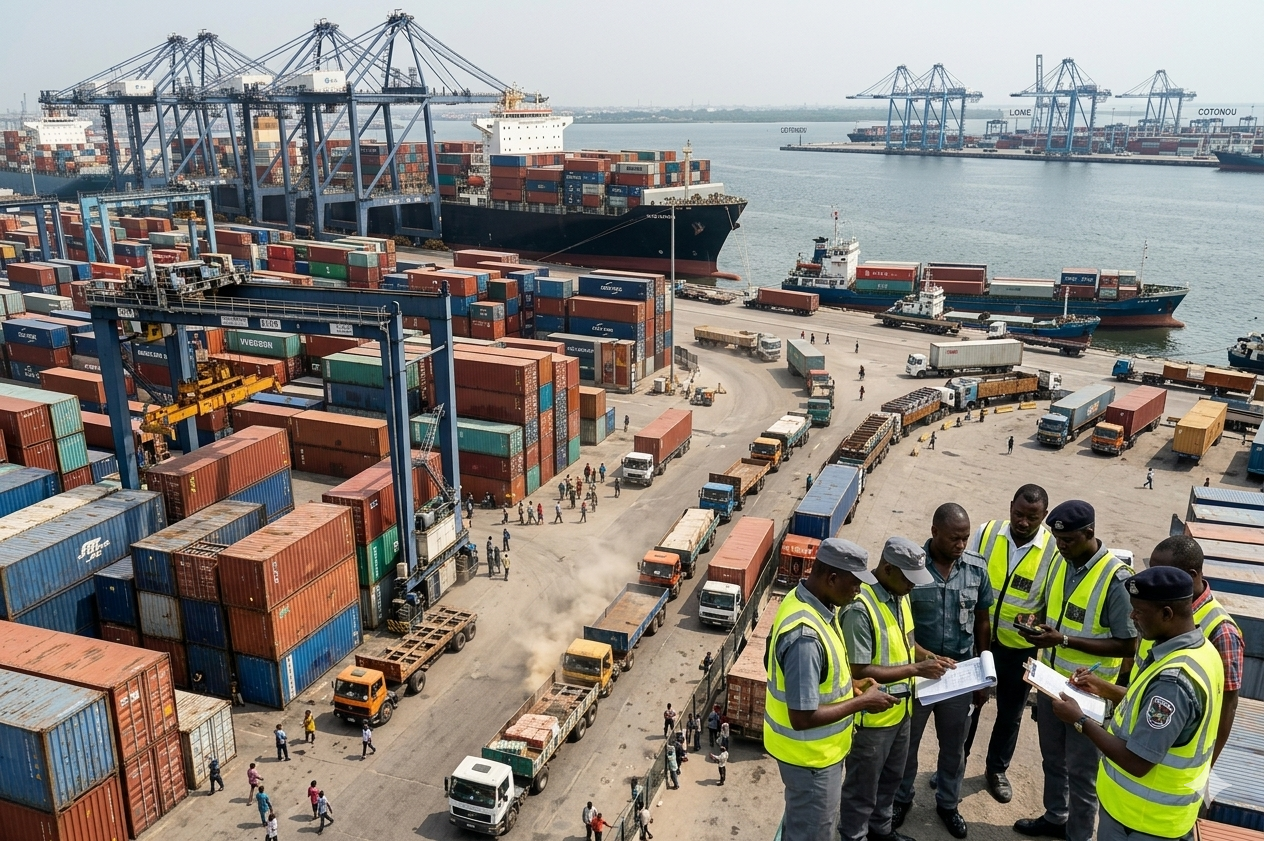
Nigeria is increasingly at risk of losing a significant share of its cargo traffic to neighbouring West African ports due to persistent inefficiencies in its maritime system, the Sea Empowerment and Research Centre (SEREC) has warned.
In a recent policy advisory titled “Maritime Reform at a Crossroads: Data Signals, Export Concerns, and the Urgent Need for Execution Discipline,” SEREC said structural challenges within Nigeria’s port operations are weakening the country’s competitiveness and encouraging shippers to divert cargo to more efficient regional hubs such as Cotonou in Benin Republic and Lomé in Togo.
The research body noted that while customs revenue recorded modest growth of about 12 to 18 percent in early 2026, key operational indicators continue to deteriorate. Average cargo dwell time at Nigerian ports has exceeded 15 days, while vessel turnaround time ranges between four and six days — significantly higher than competing ports in the region.
SEREC further reported that non-oil export throughput declined by between 8 and 12 percent in the first quarter of 2026, a trend it described as a clear signal of weakening export competitiveness.
According to the advisory, ports along the Cotonou–Lomé corridor are increasingly attracting Nigeria-bound cargo due to lower handling costs, faster clearance processes, and more predictable regulatory systems. These advantages, combined with expanding regional trucking and transshipment networks, are steadily shifting trade flows away from Nigerian terminals.
The centre warned that if current conditions persist, between 15 and 25 percent of Nigeria-bound cargo could be diverted to neighbouring ports within the next 12 to 24 months.
“This is not a theoretical risk—it is already happening. Cargo flows to where systems work best, not necessarily where geography dictates,” the report stated.
SEREC also highlighted broader economic consequences, including revenue losses from customs duties, distortions in national trade data, job losses in logistics, and a gradual erosion of Nigeria’s position as a regional maritime hub.
The group stressed that without urgent reforms to improve efficiency, reduce clearance delays, and modernise port operations, Nigeria risks being increasingly bypassed in West African trade routes.