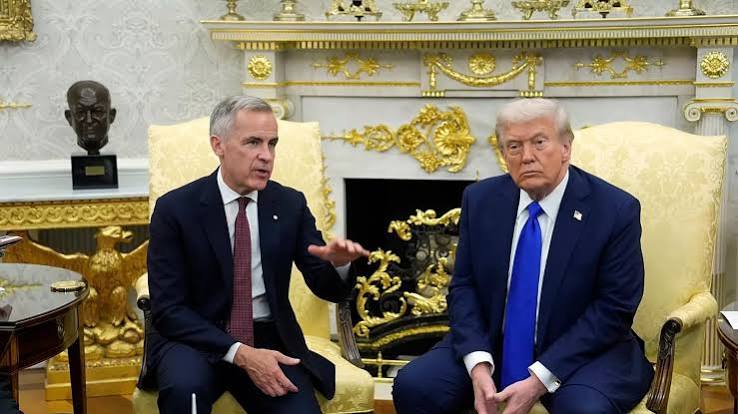
US President Donald Trump has threatened to impose 50 per cent tariffs on Canadian cars, trucks, automotive parts and steel from January 1, 2027, following the collapse of trade negotiations between Washington and Ottawa.
Trump announced the proposed increase on Monday, escalating an already bitter trade dispute between the two North American neighbours and raising fresh concerns over the future of the region’s highly integrated automotive industry.
The proposed tariffs would double the current 25 per cent rate on Canadian vehicles and automotive products, placing additional pressure on manufacturers whose production networks span both sides of the US-Canada border.
Trump said the new measures were necessary because, in his view, Canada had taken advantage of the United States for years.
He also urged Canadian manufacturers to relocate production to the United States, suggesting that companies producing vehicles and parts within the US could avoid the higher tariffs.
The threat came shortly after trade negotiations between the two countries collapsed, with both sides accusing the other of making unacceptable demands during discussions aimed at reaching a broader agreement.
The negotiations had raised hopes of reducing some of the existing trade barriers affecting Canadian exports to the United States, particularly in the automotive and metals sectors.
However, disagreements over the terms of a potential deal ultimately prevented an agreement from being reached.
Canadian Prime Minister Mark Carney has rejected Washington’s demands, arguing that Ottawa cannot accept an agreement that compromises Canadian interests, industries or sovereignty.
Carney has also accused the Trump administration of seeking to undermine major Canadian industries through its trade demands.
The Canadian government is preparing retaliatory tariffs against American products, with officials indicating that Ottawa intends to respond on a dollar-for-dollar basis.
The escalating dispute has placed the North American automotive industry at the centre of the latest confrontation.
Canada is deeply integrated into the US automobile manufacturing system, with vehicles and components frequently crossing the border multiple times during the production process.
Industry analysts have warned that imposing significantly higher tariffs could disrupt established supply chains, increase production costs and potentially raise vehicle prices for consumers in both countries.
Canada accounts for a significant share of US vehicle and automotive-parts imports, meaning that the impact of the proposed tariffs would not necessarily be limited to Canadian manufacturers.
American automakers with operations and suppliers in Canada could also face higher costs and logistical challenges if the measures take effect.
Several major automotive companies have already come under pressure from the uncertainty surrounding the escalating trade dispute, with shares of some manufacturers and Canadian auto-parts companies declining following Trump's announcement.
The proposed tariffs are also expected to put thousands of Canadian automotive jobs at risk if manufacturers are forced to reconsider their production arrangements.
Trump has repeatedly argued that tariffs can encourage companies to move manufacturing into the United States and create more domestic employment.
Canadian officials, however, maintain that such measures could damage industries on both sides of the border because of the close integration of the two economies.
The latest escalation follows a series of trade disputes between Washington and Ottawa under Trump's administration, with tariffs on Canadian products and retaliatory measures from Canada becoming a recurring source of tension.
The two countries share one of the world's largest bilateral trading relationships, making prolonged tariff escalation potentially damaging to businesses and consumers in both markets.
The proposed 50 per cent tariffs are not scheduled to take effect until January 1, 2027, leaving room for further negotiations between the two governments.
Some industry observers believe Trump's latest threat could be used as leverage to bring Canada back to the negotiating table rather than necessarily representing the final outcome of the dispute.
For now, however, relations between Washington and Ottawa appear to be deteriorating, with both governments preparing for the possibility of a prolonged trade confrontation.
The Canadian government has vowed to defend its industries and economic interests, while Trump has continued to pressure Canadian businesses to shift production south of the border.
The coming months are therefore expected to be crucial for the North American automotive sector as businesses assess the potential impact of the proposed tariffs and both governments determine whether they can return to negotiations.
If implemented as threatened, the 50 per cent tariffs would mark another major escalation in the US-Canada trade conflict and could significantly reshape automotive production and supply chains across North America.