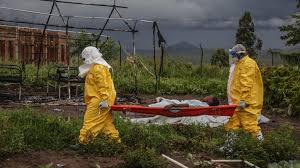
Ten African countries have been placed on high alert as health authorities intensify efforts to contain a growing Ebola outbreak spreading across parts of Central and East Africa.
The Africa Centres for Disease Control and Prevention (Africa CDC) warned that countries including South Sudan, Rwanda, Kenya, Zambia, Tanzania, Ethiopia, Angola, Burundi, the Central African Republic and the Republic of Congo are at high risk due to cross-border movement and regional insecurity linked to the outbreak in the Democratic Republic of Congo (DRC) and Uganda.
According to health officials, the outbreak, caused by the rare Bundibugyo strain of the Ebola virus, has already recorded hundreds of suspected cases and deaths in affected areas. The World Health Organization (WHO) has described the situation as “extremely serious,” warning that the disease is spreading faster than current response efforts.
The DRC declared its 17th Ebola outbreak earlier this month, with infections concentrated in the conflict-hit Ituri Province. Uganda has also confirmed several cases, including infections involving health workers and individuals who crossed from the DRC.
Health experts say insecurity, porous borders, population displacement, and attacks on medical facilities are hampering containment efforts. Reports indicate that some Ebola patients fled treatment centres after violent attacks by locals opposed to burial protocols and quarantine measures.
Africa CDC Director-General Jean Kaseya urged neighbouring countries to strengthen surveillance, border screening, emergency preparedness, and public awareness campaigns to prevent further spread across the continent.
The outbreak has also triggered heightened international concern because there is currently no approved vaccine specifically targeting the Bundibugyo Ebola strain responsible for the latest infections